

Salting and Ice Management in Asheville
Ice is the real hazard.
In Western North Carolina, ice does more harm than snow. Freezing rain can glaze a drive quickly, ice storms bring down limbs and lines, and shaded slopes refreeze night after night following a thaw. M&S Land Management pre-treats, salts and comes back for refreeze on lots, walks, private roads and steep drives around Asheville, with the plan set before the season.
- Free on-site estimates
- Owner-run by McKinley
- Residential and commercial
Ice control on mountain ground
Freezing rain and ice storms
Freezing rain is rain that falls through a shallow layer of cold air near the ground and freezes on whatever it touches. The mountains and foothills get their share, often when cold air settles into the valleys while warmer air rides over the top. A thin glaze on a steep drive is worse than a deep snow, because there is nothing for tires or boots to bite into, and it can form while the forecast still says rain.
Heavy ice also brings down limbs and power lines, which can block a drive or a private road as surely as snow. Ice events often come with no plowable snow at all, which is why salting needs its own trigger in a contract. A property set to wait for a plowing depth may never get treated in an ice storm, even though that is the storm most likely to put a car in the ditch.
Refreeze on shaded slopes
The sun does a lot of the work in a southern winter, but only where it reaches. A north-facing drive, a cove road under rhododendron and pines, or a lot in the shadow of a ridge can hold ice for days after the rest of the valley is dry. Melt runs across the surface in the afternoon and freezes again at night, so the same stretch turns to ice every evening.
Those spots are marked at the walk-through and put on the refreeze list. A refreeze visit is a return trip, often early in the morning, to treat the stretches that iced back up overnight. The other half of the fix is water: melt should run off the drive, not across it. Open ditches and clear culvert inlets help, and drainage work in the off season cuts refreeze at the source.
Pre-treating before the storm
Ice is easier to stop than to remove. Treating pavement before freezing rain starts keeps ice from bonding to the surface, so what does form breaks up and clears more easily. It is the same idea NCDOT uses when it brines main roads ahead of a storm. Pre-treating suits paved lots, entrances, walks and steps, and it goes in the contract as its own trigger, tied to the forecast rather than to what is already on the ground.
Pre-treating does much less on gravel, where the material sinks into the stone. On gravel drives and private roads the approach is different: plow to a thin packed layer, then put down grit, or a salt and grit mix, on the steep pitches and curves so tires have something to hold. The grit stays on top after the salt has done its work.
Grades where ice is the real hazard
On flat ground, ice is a slip hazard. On a grade, it is a sliding hazard. A car that loses grip on a steep drive keeps going until something stops it, and on many mountain drives that is a ditch, a bank or a drop. So treatment goes first where losing grip costs the most: the steepest pitch, the curve at the top of it, the stretch above a drop-off, and the approach to the road where a car has to stop.
For businesses the same thinking applies at a smaller scale. Entrances, ramps, steps and the sloped part of a lot where people walk from their cars get treated first, then drive lanes, then parking rows. Steps and walks are covered in more detail on sidewalk and entrance clearing, since most falls happen there. Ramps and the route from accessible parking are part of that first round of treatment.
Choosing the material
Rock salt is the common choice for pavement. It works well near freezing and slows down in a hard cold snap, which is when a different product or a grit mix earns its place. Grit, such as sand or fine crushed stone, adds traction at any temperature but melts nothing. On gravel drives, fine stone grit matches the surface and can be graded back in when spring comes, instead of washing into the ditch.
Salt is hard on fresh concrete, some pavers, stone steps, plantings and the grass along a walk. The contract names which material goes on which surface, and any spot the owner wants left untreated. Telling McKinley about new concrete or a stone patio before the season keeps the wrong product off it. Where nothing should melt, grit alone gives grip without the damage.
Snow Removal and Ice Control
Plowing, salting, hauling and walk clearing for homes, private roads and businesses around Asheville.
See the pageTalk to McKinley(828) 540-6856
Call or text the address and what needs clearing: a lot, a drive, walks or all three. McKinley sets the route and the terms with you before the first snow.
Call nowWhat that covers
- Pre-treating. Paved lots, entrances and walks treated ahead of freezing rain.
- Salting lots. Entrances and walking routes first, then lanes and rows.
- Walks, steps and ramps. Treated with a material suited to the surface.
- Grit on gravel. Steep pitches and curves on drives and private roads.
- Refreeze visits. Return trips to shaded stretches that ice back up.
Snow Removal and Ice Control
Plowing, salting, hauling and walk clearing for homes, private roads and businesses around Asheville.
See the pageSnow serviceCommercial Snow Contracts
Seasonal, per-push and per-event snow and ice contracts, walked and mapped before the first storm.
See the pageSnow serviceSidewalk and Entrance Clearing
Walks, entrances, steps and ramps cleared and treated so people get from the car to the door safely.
See the pageSnow serviceSnow Hauling
Snow piles loaded out with the skid steer and dump truck when a tight mountain lot has nowhere to push.
See the pageSnow serviceSnow Plowing
Lots, private roads, mountain community roads and long drives, plowed in an order set before the season.
See the pageIce work across the mountains
Ice is the main winter job on mountain property. Salting is usually part of a commercial snow contract for businesses and HOAs, or added to steep driveway snow plowing at home. The town pages for Asheville, Hendersonville, Black Mountain and Brevard cover local roads and grades, including the shaded coves and north-facing slopes where refreeze is worst.
Set up before the first storm.
You call
Call or text with the address, how steep the drive or road is and what needs clearing: lot, drive, walks or all of it.
McKinley walks it
He walks the property before the season, notes the grades, the shaded stretches and where the snow can go.
Terms in writing
Seasonal, per push or per event, the trigger, salt and walks are written down before anyone needs them.
Cleared when it falls
When the storm comes, the property is worked in the agreed order and treated where ice will form.
The machines and the crew.
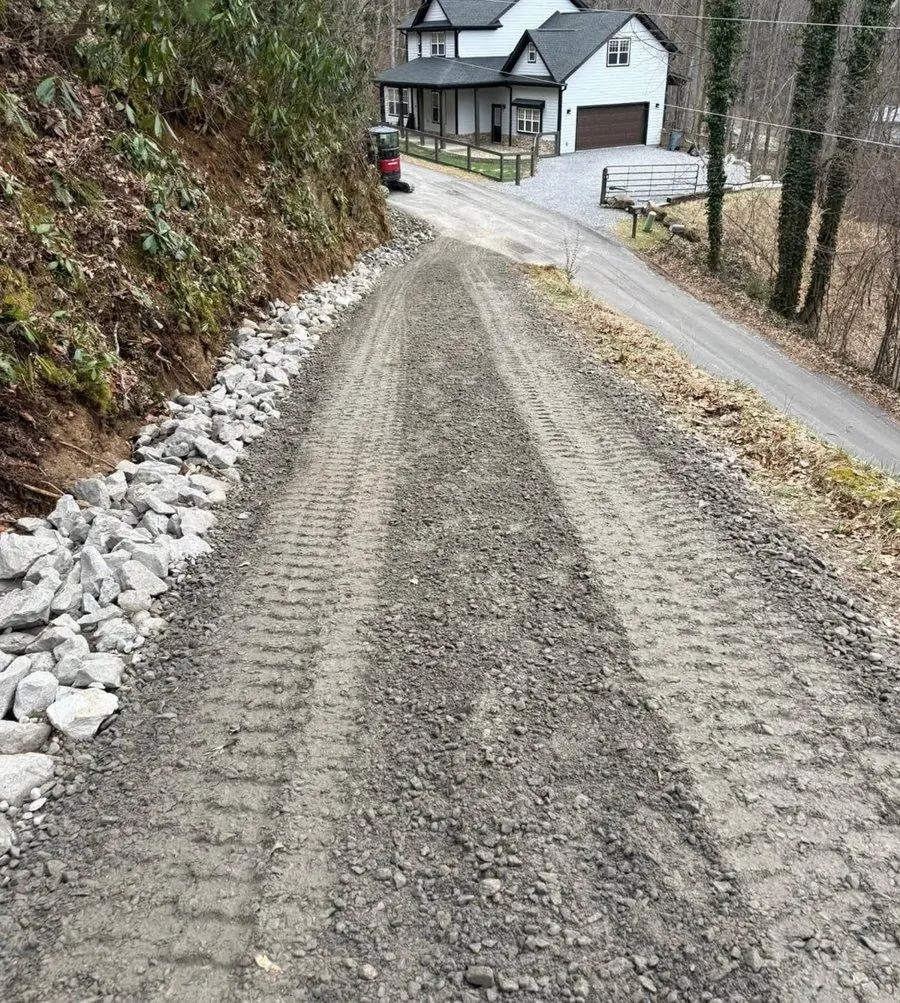
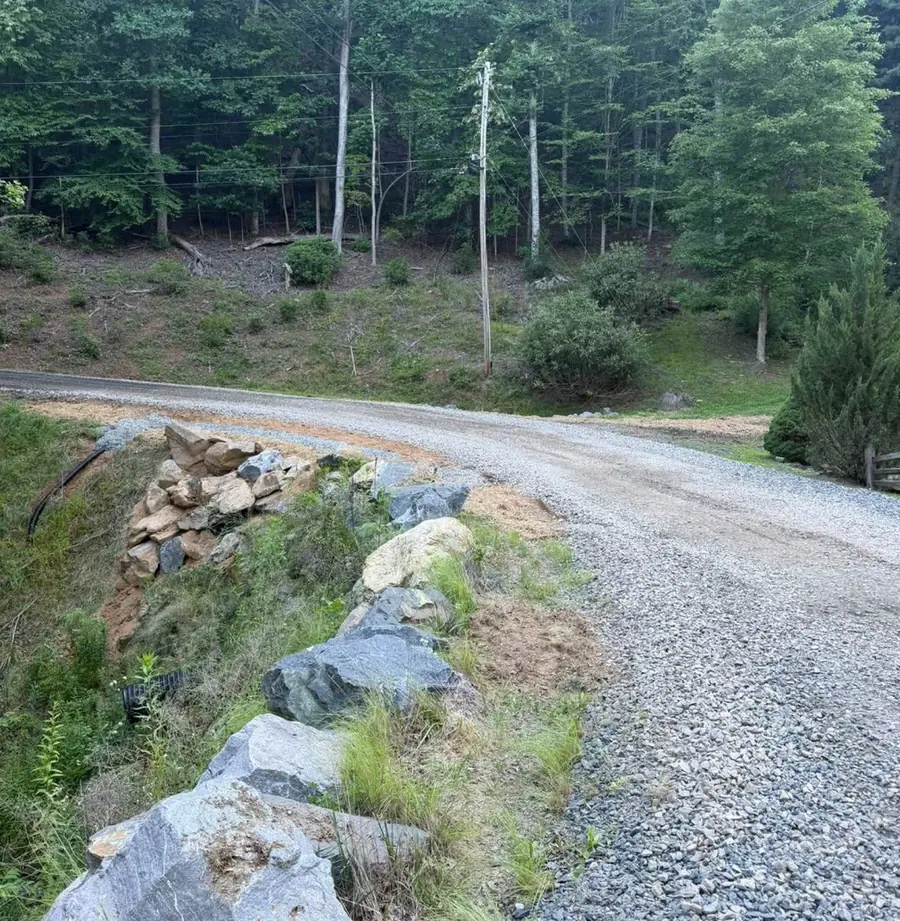
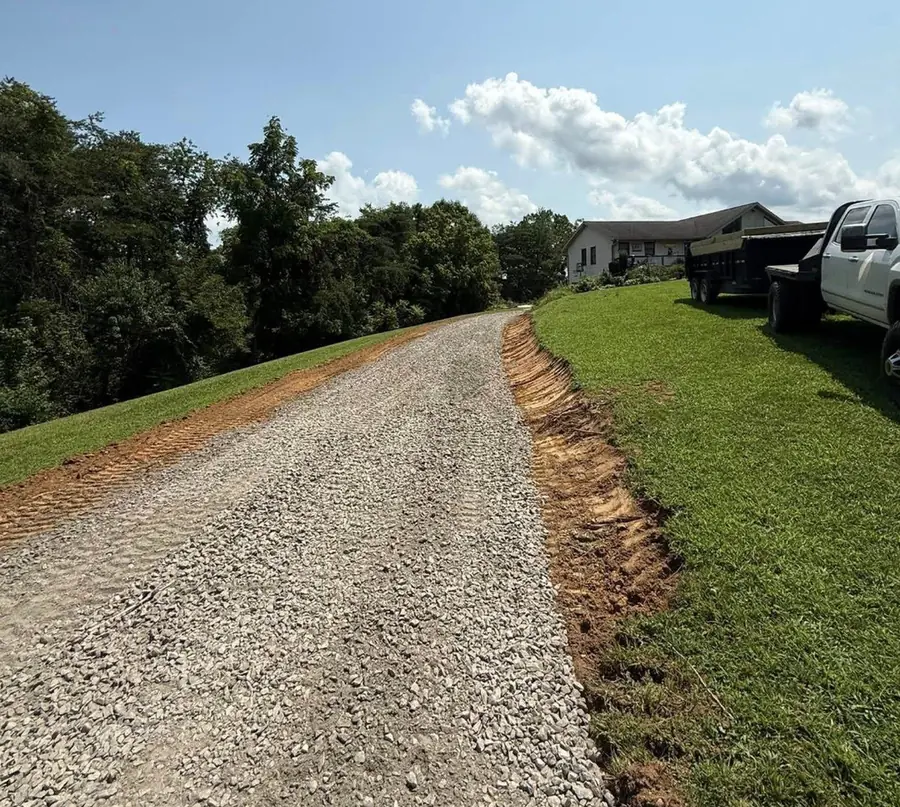
These are photographs from McKinley's actual jobs: the same equipment and the same crew that run the snow routes. See more recent work.
Questions people ask
Not seeing yours? Call (828) 540-6856 and ask McKinley, or read the guides.
Does salt work on a gravel driveway?
Partly. Salt sinks into loose stone, so it does little as a pre-treatment on gravel. Once the drive is plowed to a thin packed layer, a salt and grit mix on the steep pitches and curves loosens the ice while the grit gives tires something to hold. Plain fine stone grit is often the main tool, because it matches the drive and works in any cold.
What is a refreeze visit?
A return trip to treat spots that iced back up after melting. On mountain property that is usually a shaded stretch of drive, a north-facing walk or steps, or the area below a snow pile. Melt runs across in the afternoon and freezes at night. Refreeze spots are marked at the walk-through, and the contract says whether these visits are included or billed separately.
Do you salt when it has not snowed?
Yes, if the contract has an ice trigger. Freezing rain and ice storms often come with no plowable snow, and those are the events that cause the most trouble on mountain grades. The contract should say what starts salting: freezing rain itself, a forecast for it, or refreeze on the marked spots.
Will salt damage my concrete or plants?
It can. Salt is hard on fresh concrete, some pavers and natural stone, and it burns grass and plantings along walks. The contract names which material goes on each surface and lists spots to leave untreated. Tell McKinley before the season about new concrete, pavers or stone steps so a gentler product or grit goes there instead.
Can you pre-treat before an ice storm?
Yes, on paved lots, entrances, walks and steps. Pre-treating before freezing rain keeps ice from bonding to the pavement, so it breaks up and clears more easily. It does the most good on pavement and much less on gravel. The contract sets pre-treating as its own trigger tied to the forecast, so it happens before the storm, not after.
Other work he takes on
Most jobs end up being two or three of these at once, and they get quoted together.
Snow removal in other towns
Gravel Driveways
A new drive cut into the hill, based in lifts and crowned to shed water.
Learn moreDriveway Repair & Grading
Washouts, ruts and potholes fixed at the cause, not just regraded.
Learn moreDrainage & Erosion Control
French drains, catch basins, culverts and riprap so the property sheds water.
Learn moreRetaining Walls
Block, boulder and riprap walls that hold a cut bank up.
Learn moreLand Clearing
Lots, building sites and overgrown acreage cleared, stumps and root mat out.
Learn moreHouse Pads & Site Prep
Pads cut, filled and compacted on ground that started at anything but level.
Learn moreFree salting and ice estimate.
The address, how steep the drive or road is, and what needs clearing. McKinley walks it before the season and gives you the terms in writing.
- Free on-site estimates across WNC and the Upstate
- Residential drives and commercial lots
- Seasonal, per push or per event, set up before the first storm
Snow removal where you are
Each town has its own page: what winter does there, what gets plowed and how the contracts are set up.
Worried about ice this winter?
Call McKinley at (828) 540-6856 to get your lot, walks or steep drive on the salting plan.