

Retaining Walls in Asheville, NC
Hold the bank.
Cut a drive or a pad into a hillside and you have made a bank that wants to come back down. Walls and riprap are what keep it up there.
- Free on-site estimates
- Owner-run by McKinley
- WNC & Upstate SC
What you get
- Block and stone retaining walls
- Riprap for banks, ditch lines and outlets
- Drainage built in behind the wall
- Cut banks stabilised alongside drives and pads
- Capped and graded above
A retaining wall is a drainage structure that happens to be made of block or stone. Water behind a wall is what pushes it over, so what goes in behind it matters as much as what you can see.
Drainage stone, filter fabric and a working outlet go in as the wall goes up.
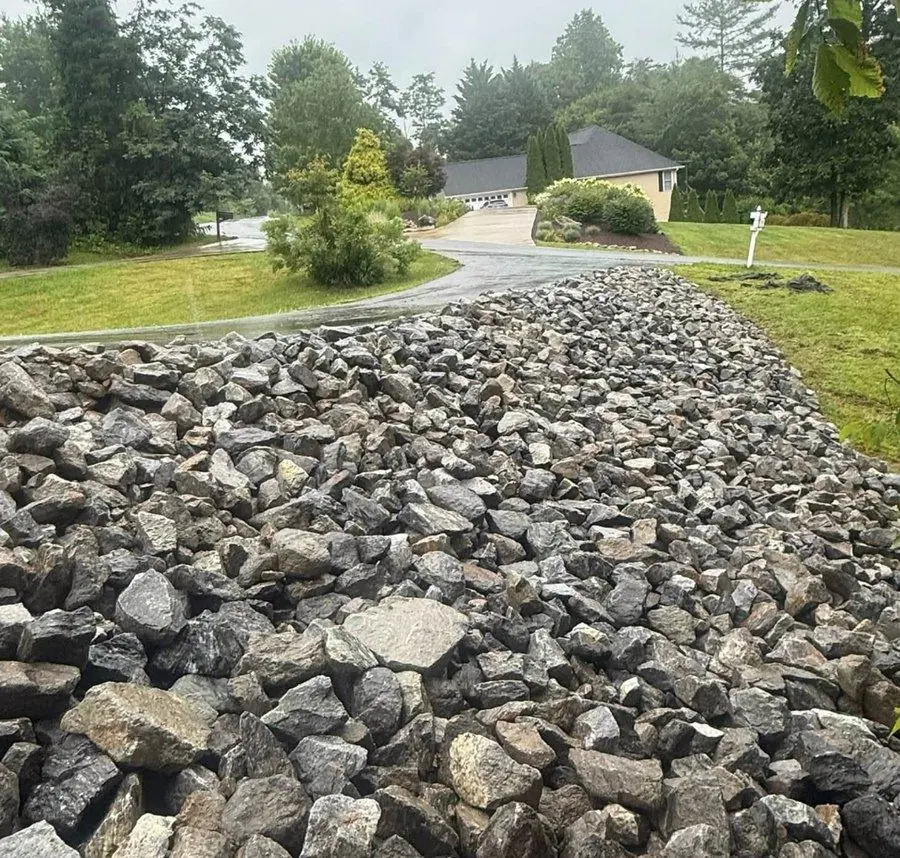
What actually happens on site.
Cut and base
A level, compacted base course below grade. Everything above depends on it.
Build and backfill
Course by course, with drainage stone and fabric behind as it rises.
Drain it
A working outlet at the bottom, because water behind a wall is what takes walls down.
Cap and grade
Capped, and the ground above graded to send water somewhere else.
Retaining Walls near you
Based in Asheville, working across Western North Carolina and down into Greenville and Spartanburg. See the full service area.
Where we do this
Western North Carolina
Retaining Walls on the ground
Every photo here is from a real M&S job. See more of our work.
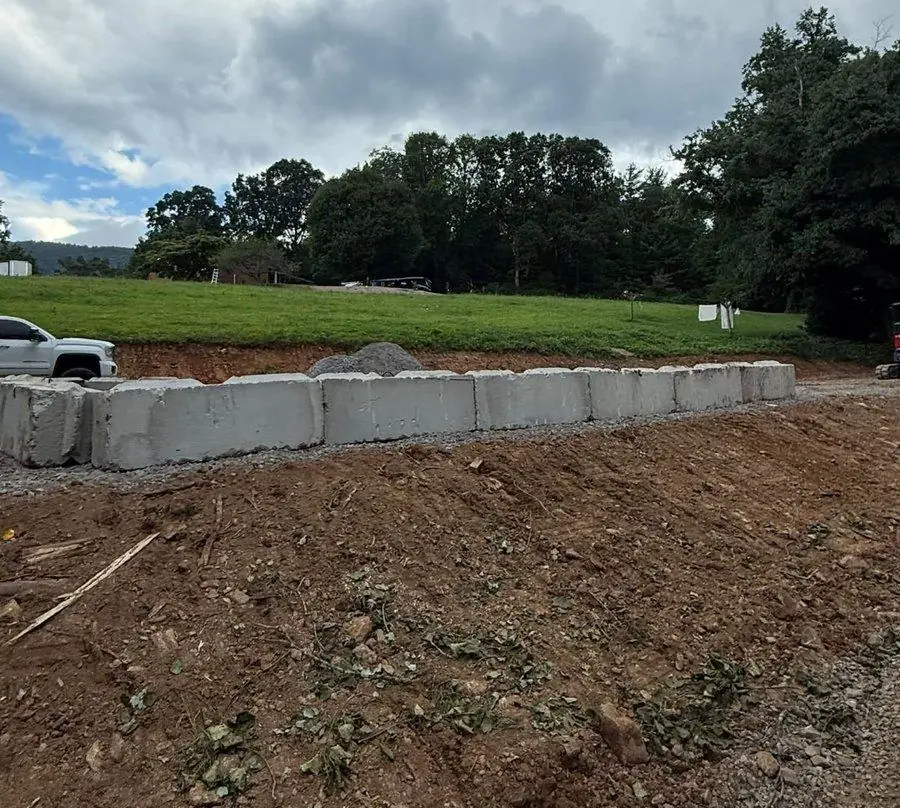
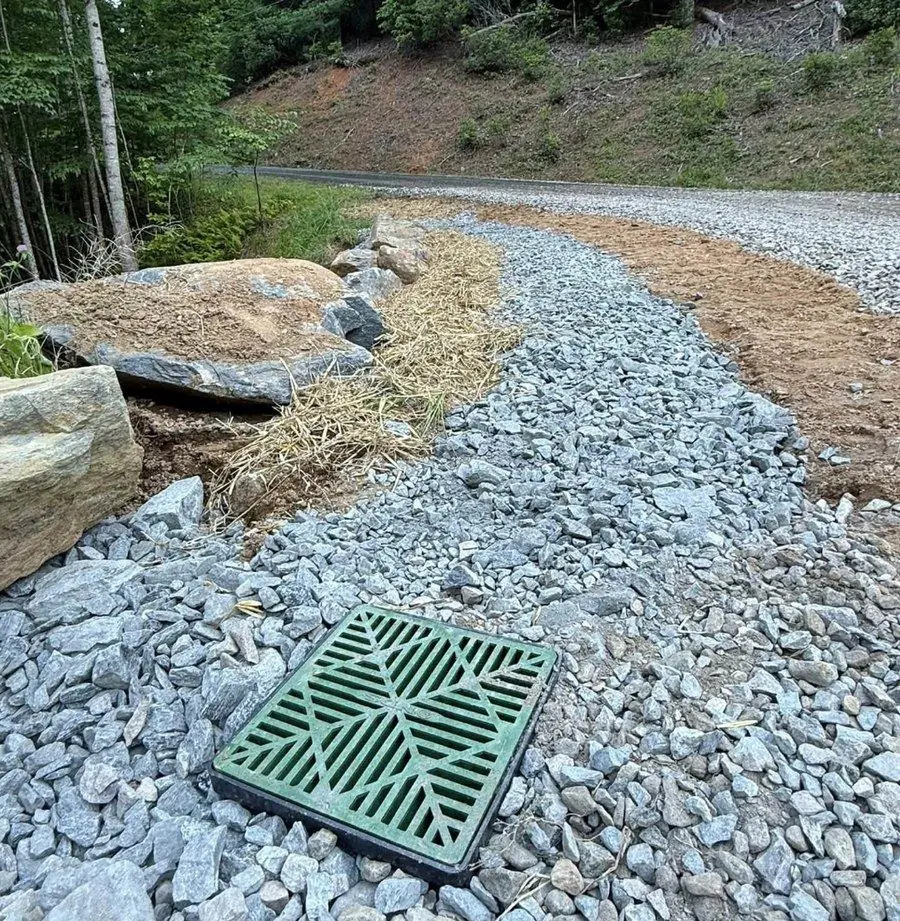
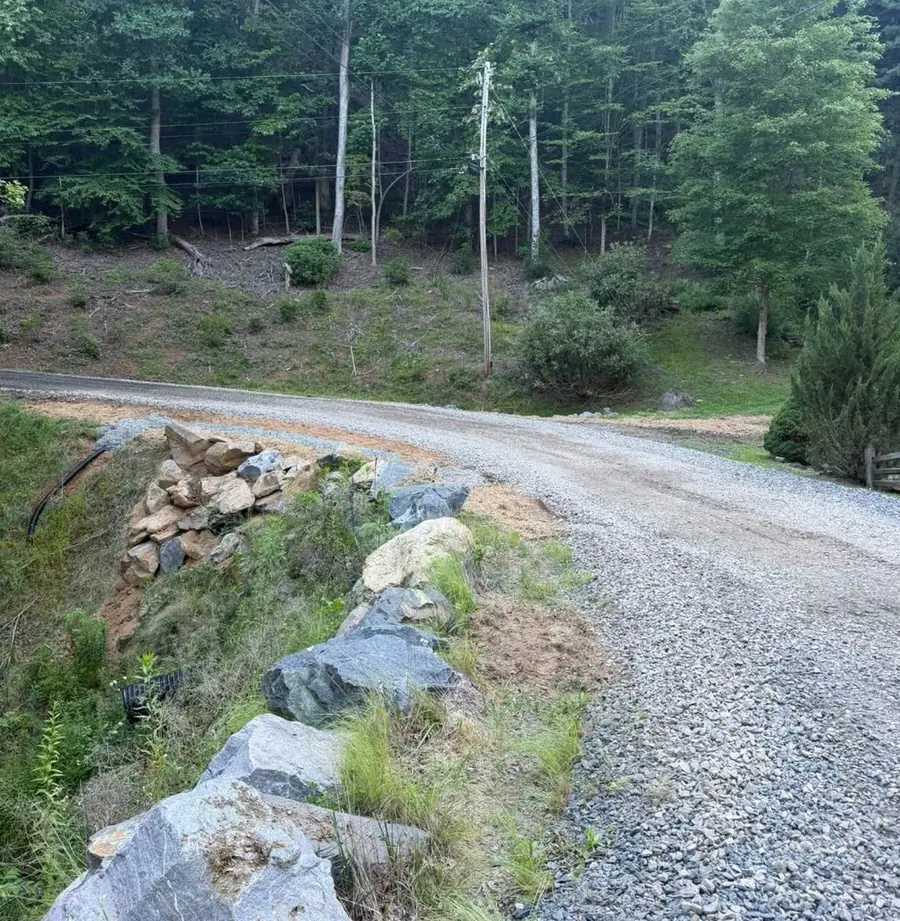
Asked about this job.
Not seeing yours? Call or text (828) 540-6856 and ask McKinley, or read the guides.
- Cost GuideWhat a Retaining Wall Costs in Asheville
- GuideDo You Need a Permit for a Retaining Wall in Asheville?
- GuideDriveway Culvert Pipes in Western North Carolina
- GuideFrench Drain vs Regrading: Which One Fixes Your Yard?
- GuideDo You Need a Permit for a Gravel Driveway in North Carolina?
- GuideDo You Need a Permit for a Driveway in Upstate SC?
How tall can you build?
It depends on the soil, the load above and what is behind it. Past a certain height a wall needs engineering, and we will tell you when you are at that point rather than building it and hoping.
Related pages
Keep reading, or call and ask.
Get a price for retaining walls.
Where it is, how long the drive is, how steep it gets and what it is doing now. We come out, walk it, and give you a real number.
- Free on-site estimates across WNC and the Upstate
- One crew from clearing through to the last load of stone
- Drainage designed in, not sold to you afterwards
Free estimate. Real number.
Call or text McKinley. He walks the ground before he gives you a price.